










This article was first published on 23 April 2020 by Registered Dietitian, Anne Wright. It was updated and reviewed by Registered Dietitian, Cordelia Woodward (MyNutriWeb), in October 2025.
Since this interview was first published, there has been growing recognition that sustainable, plant-forward menus can help healthcare organisations reduce environmental impact while still meeting nutritional needs. Initiatives such as Greener by Default are supporting hospitals and care settings to rethink how menus are designed, placing inclusive and nutritious plant-based options at the centre.
We spoke with sustainable dietitian Louise Symington to explore how dietitians can best support vegan patients needing vegan nutrition support.
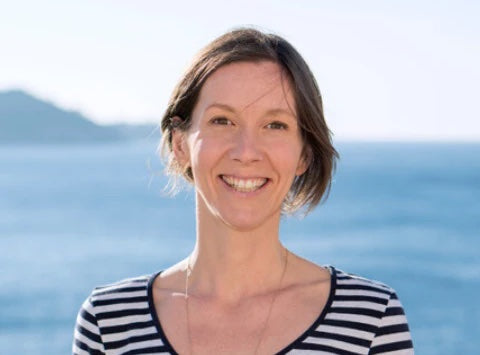
About Louise Symington, RD
Louise Symington is a Registered Dietitian with a Masters (MSc) in Food Sustainability. Over her career, she has worked for a number of organisations such as Sustain, The National Trust and The Sustainable Restaurant Association. Louise has been a guest lecturer at London Metropolitan University and was on the advisory panel for DEFRA’s Green Food Project.
Louise currently works as a freelance Dietitian, providing nutritional advice to individuals and food companies. She is also leading the food sustainability module for Culinary Medicine UK.
If she's not behind her laptop, you’ll find her in her wellies, working at her local community allotment, where she coordinates and runs local food growing projects.
A Dietitian’s approach to a sustainable diet
When I spoke to Louise Symington over the phone, she was cutting up vegetables to throw into her slow cooker. Using the end of the week’s leftovers to reduce food waste, she is definitely a Dietitian who practices what she preaches.
Louise is “The Sustainable Dietitian”. With an MSc in Sustainability in the Food Industry and having consulted on high-level government, charitable and food industry projects for organisations such as Sustain, and DEFRA (Department for Environmental, Food, and Rural Affairs), Louise is considered an industry expert in the field.
I asked Louise what made her decide to go into the field of food sustainability. “I have always been interested in food, nutrition, and health, but I think the trigger for me was the bovine spongiform encephalopathy (BSE) outbreak that occurred in the 1990s. I felt very strongly that there should be transparency and information about our food supply readily available to the public. Working as a Dietitian in clinical practice, I wanted to do more and looked for additional training in the area. Sustainability in the food industry was the closest match. From my work with my MSc, I have been able to try to make an impact by working on policy and awareness around the food chain and planetary health.”
When it comes to a “sustainable diet”, however, it seems there is a misunderstanding that this means a vegan diet for the whole population.“ There is no universal definition of a sustainable diet”, Louise told me. “There is more to it than just being vegan. Eating sustainably depends on who you are, where you live, food supply and economic viability. In a broad context, it means eating in a way to support planetary health. There’s been a focus on what we can do to reduce CO2 emissions as, at the moment, this is one of the few measures we have for planetary health. But we also need to think about ethics, waste and overuse of resources. A sustainable diet takes all of this into account.”
The challenges facing malnourished vegan patients
Louise herself chooses to eat a mostly plant-based diet and has done so for many years. Even though there’s been increased awareness and more food choices available over the past few years, she recognises the challenges that people face when trying to eat sustainably. We talked more about how these challenges could be even greater for people under hospital care who require nutrition support.
"To date, I don’t feel that we’ve been doing enough to provide suitable nutrition support for patients on a vegan diet or to provide food in a more sustainable way. It’s important to recognise the pressure that hospitals are under to produce low cost, nutritious food, but I think we can do more. We are moving forward though, with some catering departments buying local and organic produce, providing plant-based or vegan menu options, and reducing use of plastics. When it comes to veganism, however, hospitals will have to change their ways now that ethical veganism qualifies as a philosophical belief under the Equality Act 2010. It’s now a humanitarian right to ask for vegan food.”
What can we do to help vegan patients?
“There are easy things dietitians can do when working with vegan patients. Meats, cheeses, and milk can be substituted for plant-based alternatives (although, where possible, choose fortified versions). We have been limited with oral nutrition supplement (ONS) options as they have historically been milk-based, so it’s wonderful to see vegan ONS feeds emerging into the market. As Dietitians, we should also adapt our advice, enabling us to provide food-first advice for vegan patients who are frail, elderly or malnourished.”
Louise’s top tips for a food-first approach with vegan patients
- Consider the nutritional composition of plant-based milk alternatives as they are not all equal. Choose fortified plant-based milk alternatives providing at least 40 to 50 kcal per 100 ml, fortified with calcium, vitamin D, iodine (if available) and vitamin B12. Protein levels tend to be highest in soya milk, making it the most comparable to cow’s milk. Pea-based drinks are also emerging as a higher-protein option, offering a similar nutritional profile to soya milk.1
- Emphasise the importance of protein. Research increasingly recognises that older adults may need more protein than the current UK recommendations suggest. As we age, maintaining and rebuilding muscle becomes more challenging, so experts such as Bauer and colleagues propose aiming for around 1.0–1.2 g protein per kg of body weight each day for those over 65. For older adults who are physically active, or those living with illness or recovering from it, needs may rise further to 1.2–1.5 g/kg/day.2,3 Furthermore, a study in 2023 found that a large percentage of older adults are below expert recommendations for protein intake.4
- Support adequate protein intake by including a wide range of plant-based proteins across the day such as beans and pulses (e.g. butterbeans, kidney beans, chickpeas, lentils and peas), tofu, tempeh, soya mince, nuts/seeds, nut/seed butters and quinoa.5
- There are some vegan protein powders on the market (soya, hemp, pea etc). These can be added to fortified plant-based milk alternatives or smoothies to create nourishing drinks.
- Increase energy density with plant-based oils (for example rapeseed, walnut, olive, hemp or sustainably sourced avocado oil) and healthy sources of fats such as avocado, tahini and nut and/or seed butters.
- Nuts and seeds are great to add to meals or as a snack for a high-energy, high-protein snack. A portion is roughly 30g (one ounce). Nuts and seeds can also be ground and blended into sauces, drinks or as a topping for porridge (which may be useful for supporting individuals with dysphagia).
- Coconut cream can be added to meals, desserts and fruit such as berries and bananas. It’s also a great addition to smoothies and curries.
-
Watch out for nutrients that can be more challenging to obtain on a vegan diet, including iodine, vitamin B12, calcium, zinc and iron. Use fortified products and consider supplements if indicated.6
We need to look out for the planet’s health too
When it comes to food sustainability, Louise's top tip would be to minimise food waste. “Cutting food waste and reducing plastic packaging is something you can do whether you're a vegan, veggie or a meat-eater. Try to encourage your patients to use up their leftovers by including them in curries, stews and old fashioned “use everything up” meals like bubble and squeak. Where possible, encourage them to recycle their ONS packaging too. Even small changes to the way we live and practice can have an impact.”
A 2025 update: sustainable menus leading the way
Since this interview was first published, more hospitals and care services have been taking bold steps to improve sustainability in catering. Plant-forward principles, such as those supported through Greener by Default initiatives, are helping healthcare settings introduce nutritious plant-forward menu choices. This shift supports patients who choose a plant-based diet for ethical, cultural or personal reasons, while also aligning with the NHS's ambition to reduce its environmental footprint. For dietitians, this offers an exciting opportunity to integrate strong nutrition support with responsible food choices that benefit people and the planet.
You can find out more about Louise via her website www.sustainabledietitian.co.uk and social media @sustainabledietitian.
Download our guide for dietitians on "Nutrition Support for Vegan Patients" below:
